
Our Story
Our Mission
Our mission is to improve the lives of underprivileged children by combining care, education, and sustainable solutions.
We focus on building systems that create long-term stability rather than short-term relief.
By applying real-world experience, accountability, and compassion, we aim to ensure that every dollar creates meaningful and lasting impact.
Our Vision
We envision a world where children—regardless of where they are born—have access to safety, nourishment, education, and opportunity.
Our vision is to build self-sustaining models that allow communities to support their children with dignity and independence.
By working both globally and locally, we hope to create a transparent, scalable approach to giving that others can trust and build upon.
Our Family
Sid Savant
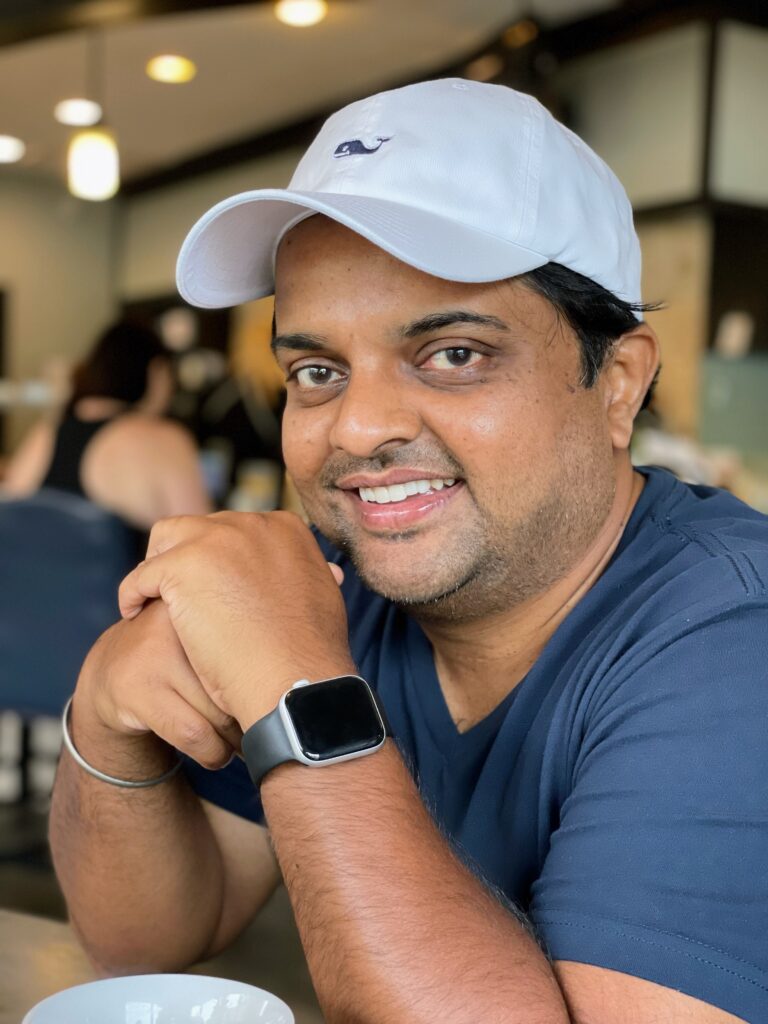
I grew up in India and moved frequently during my school years. That early exposure to different cultures and realities shaped how I see opportunity and access. After college, I jumped into entrepreneurship and started my first venture in the education space, iCampusIndia, an online platform designed to connect schools, students, and parents.
The idea was ahead of its time, and while we built meaningful features, the company struggled due to my limitation in marketing, sales, and financial backing. It didn’t succeed the way I hoped, but it became one of my most important learning experiences.
I later moved to the U.S., worked in consulting, and in 2011 co-founded ProductStack. Over the years, that journey taught me what it truly takes to build a sustainable business. We pivoted multiple times—beginning as a code-generation solution, transitioning into product management tools, and eventually becoming a company that helps clients shape user experience and go-to-market strategy. Learning when to change direction, how to execute through uncertainty, and how to build something that lasts shaped my thinking deeply.
The idea for Savants Foundation emerged during a trip to India in 2021. I had always felt a strong urge to give back. I was already supporting causes like Shriners children’s hospital in the U.S., and growing up, my parents Subhash and Bharati instilled in me empathy and a responsibility toward the underprivileged. I was also inspired by my uncle Sandesh, who after a successful career in the U.S., devoted himself to community work in India—supporting initiatives around health, education, sanitation, and water access.
I’ve always believed in the concept of the Ashramas—the idea that life moves through stages. As I approached what I see as a stage focused on reflection and purpose, I felt a growing responsibility to do something meaningful. During that time in India, it became clear to me that children are the most vulnerable—and also the most powerful agents of long-term change.
That journey led me to a small orphanage in Pune. It wasn’t an institution in the traditional sense, but a couple who had adopted 17 children since 2007 and were raising them as their own. The children are from ages few months to 21years. Some of the stories were heartbreaking—children abandoned at birth and rescued by the police. What stood out was not just the need, but the commitment and love, paired with the fragility of their financial situation.
For the past five years, my focus has been on helping this home become self-sustaining. Rather than offering only short-term support, my goal has been to help them build and operate a business that can fund care, education, and nutrition long term. We are currently building a dairy business to create recurring income. Managing this from another country, in a small remote town, across political and operational challenges, hasn’t been easy—but it has been deeply impactful.
Through the family’s hard work and our support, they’ve begun generating part of their own operating income. I waited to seek broader funding until there was a real success story, because trust matters. I wanted to be certain that this model works and that help truly reaches those who need it most. The scale of need is large, and growing this impact requires collective support.
With the experience gained through this journey, we now want to expand our work closer to home, starting with projects in Charlotte, where we live. It has been surprising—and eye-opening—to see that even in one of the most advanced countries in the world, issues like child hunger, malnutrition, and poverty remain very real. These challenges may look different than what we see in developing regions, but their impact on children is just as profound.
This has been a humbling journey. We’re still building, still learning, and slowly moving the needle. Every life matters. As a parent, this is a value I want my children to carry forward—understanding that success gives us the ability, and the responsibility, to give back.
Jessy Savant
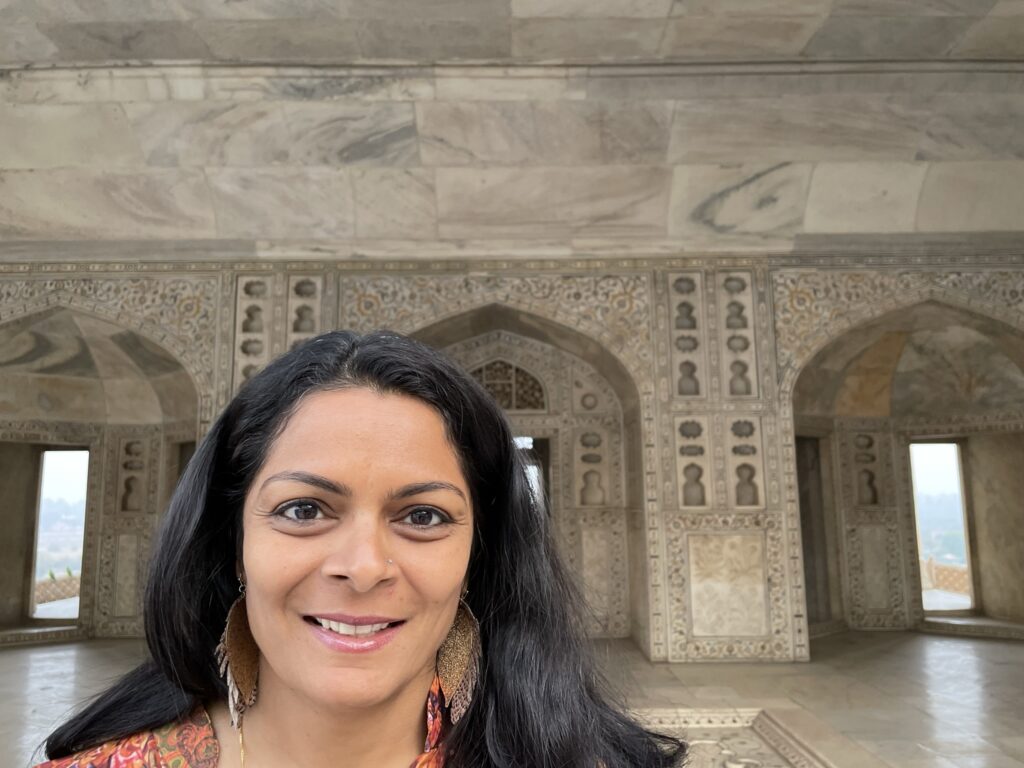
I was born and raised in a small town in India and come from a humble family. We weren’t poor, but we had days when we had to think carefully about the next meal. One thing my parents never compromised on was education. They believed deeply that education was the one thing that could change the direction of a life, and that belief stayed with me.
For high school, I moved to a city and lived on my own. That experience gave me a completely different perspective on life—independence, responsibility, and resilience at a young age. I began my professional journey at GE and later moved to the U.S., where I’ve been working at a large financial institution since 2007.
My introduction to giving back started through my workplace. Through company-sponsored community initiatives, I began working on local projects supporting underprivileged communities. Over time, I wanted to do more hands-on work, which led me to Bankers Without Borders. There, I worked with a blind industry in Kolkata, helping them improve their financial accounting. Their mission—ending abject poverty by powering a global skillanthropy movement—resonated deeply with me. It showed me how my education and professional experience could directly contribute to meaningful change.
I was later drawn to an organization called TurningPoint, which works to curb domestic abuse, sexual assault, and child abuse. That experience was deeply emotional and, at times, overwhelming. I was called late at night to support victims of rape and child abuse, and it was shocking to realize that these issues exist so prominently even in one of the most advanced countries in the world. We often live in our own bubbles, unaware of the realities around us.
Eventually, the emotional toll made it difficult for me to continue. Stepping away was not easy, and it felt like a personal failure, but I had to acknowledge that I couldn’t fully justify my time between family, work, and the intensity of that role. It was a difficult but honest realization.
When Sid first told me about the orphanage in India, I felt connected to the idea immediately. From the beginning, I’ve worked alongside him to support the children and help build a sustainable future for them. More recently, I was approached by a friend in Madrid, Spain, to mentor asylum seekers by helping them with technical coaching, and would be supporting that initiative as well.
I truly believe that even a little bit of time, skill, or financial support can make a meaningful difference. With all the instability we see in the world today, it’s more important than ever for our children to understand the value of empathy and giving back. This is a value we want to live by as a family.
I invite you to join us in giving back—because change doesn’t always require grand gestures, just consistent intention.
Sasha Savant
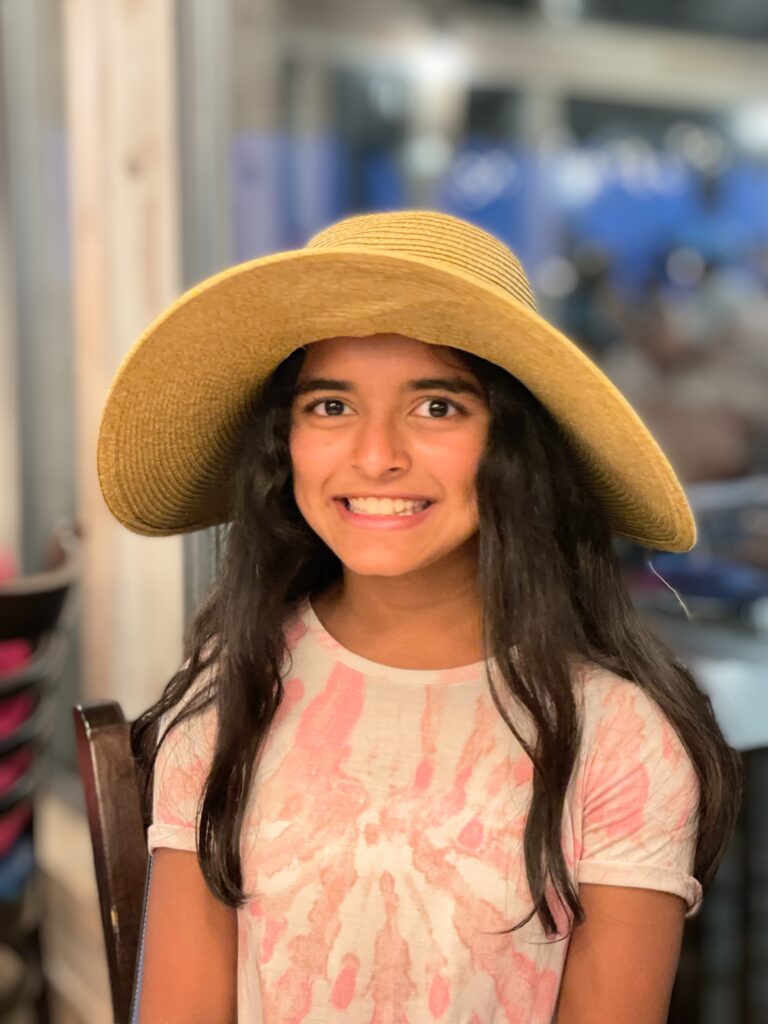
I’m currently in high school, and outside the classroom I spend a lot of time staying active and creative. I did gymnastics for several years and played field hockey for my school for four years. Music has also been a big part of my life—I’ve played the violin for over ten years, and I started a girl band with friends where I play bass and electric guitar, and occasionally sing. We’ve performed at churches, old age homes, and at Charlotte annual Christmas show each year. I’m also involved in several school clubs and serve as an officer in one of them, which has helped me grow as both a leader and a teammate.
Academically, I’m especially interested in Biology and Chemistry, and I’m currently leaning toward medicine as a future profession. Learning about science has made me more aware of how health, nutrition, and access to opportunity shape people’s lives in very different ways.
When my parents started supporting the orphanage in India, they wanted my brother and me to understand a side of life that’s very different from our own. Each year when we visit, we spend time with the children there. Their lives are so different from ours in the U.S., and being around them has helped me realize how fortunate we truly are. Things that feel like big problems to us—like not having the right outfit for a dance—are very small compared to not having nutritious food every day.
My brother and I have organized clothes drives in our neighborhood and brought those donations to the children in India. We’ve also taken them to amusement parks and malls, giving them experiences they don’t usually get. Even though those moments are short, they mean a lot—and being able to share them has been incredibly meaningful to me.
One moment that stayed with me deeply happened during one of those trips. We were at a mall surrounded by toys and clothes when one of the younger boys quietly asked my dad if he could buy him more undergarments because he only had one. I was shocked—not by him, but by how something so basic could mean so much. That moment changed how I think about need and privilege.
Over time, I realized that because of distance, language barriers, and school commitments, I couldn’t always be directly involved the way I wanted to be. That’s when I decided to help expand the foundation by starting a youth-led initiative. The goal is for my brother, my friends, and me to organize local drives and fundraisers to support specific needs at the orphanage and, eventually, in our own community.
I’m still learning, but I’ve come to understand that success isn’t just about personal achievement—it’s about using what you have to help others. No matter what career I pursue, giving back will always be part of who I am.
Savir Savant
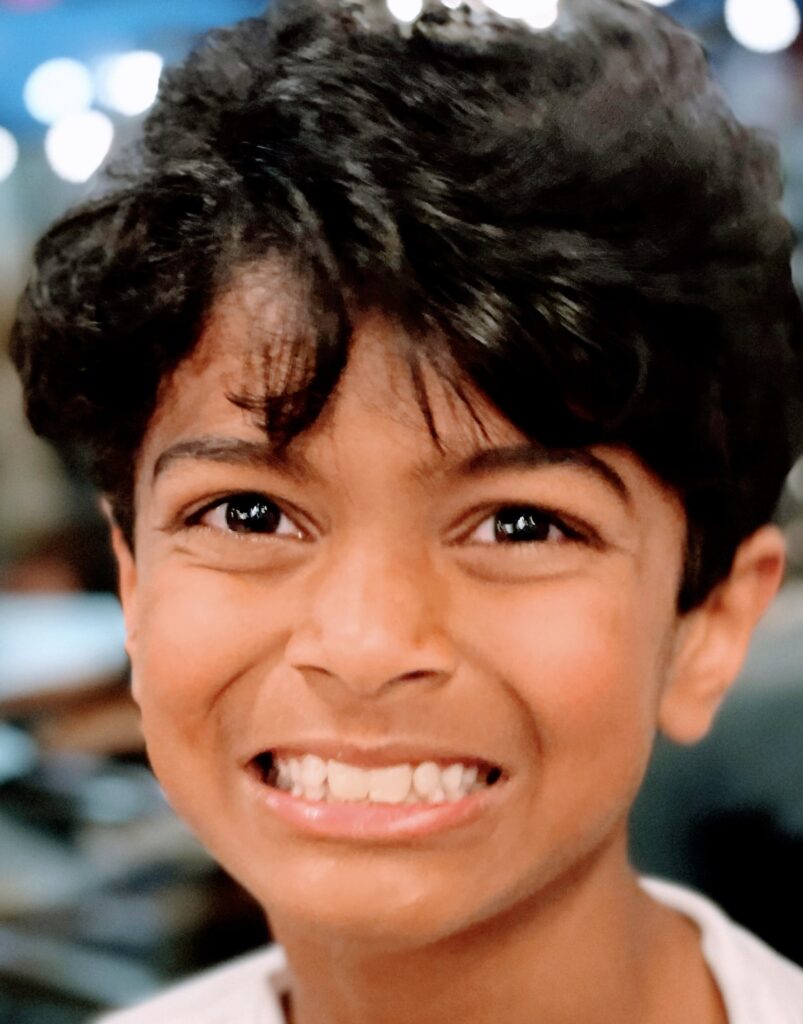
I’m currently a middle school student, and I love balancing tech and sports. I enjoy playing VR and video games, but I also love being outdoors. I’ve participated in soccer and cross country, and staying active is important to me.
One of the biggest parts of my life has been karate. I’ve been training for the past seven years and have earned my third degree black belt. This year is especially exciting because I’ve started assisting in karate classes. It’s my first job, and I’m really dedicated to it. Teaching younger students has helped me build confidence and responsibility.
I’m also involved in robotics and hoping to qualify for Nationals this year. I enjoy building, coding, and solving problems as part of a team. Music is another interest of mine — I play the piano and enjoy learning new pieces.
Being involved with the orphanage has been a humbling experience for me. While I’m not always directly involved because of school and activities, I support my sister Sasha with the youth programs and help wherever I can.
I’m learning that even small contributions can make a big difference. If you’re a student like me, I hope you’ll join us — giving a little can go a long way.